Director of Nursing Training That Actually Sticks: The 90-Day Framework to Stop Turnover
- don2dondevelopment
- Feb 19
- 4 min read
You finally hired a new Director of Nursing. They seemed perfect in the interview: confident, experienced, ready to hit the ground running. You hand them the keys, the policy binder, and point them to the nurse's station.
Three months later, they're gone.
Sound familiar? You're not alone. The 90-day mark is when most DONs walk away. Not because they can't do the job. Because nobody gave them the support to survive it.
Here's what actually works: a structured 90-day framework that treats onboarding like the insurance policy it is. Because replacing a DON costs your facility over $100K in recruitment, productivity loss, and regulatory risk. This framework cuts that turnover by up to 25%.
Let's break down what that looks like.
Why Most DON Onboarding Fails
Most facilities do some version of this: shadow the outgoing DON for a few days (if you're lucky), get a tour, sit through a couple policy meetings, then: good luck.
That's not onboarding. That's survival mode from day one.

New DONs are drowning before they even learn where the supply closet is. They're managing staff conflicts, putting out regulatory fires, and fielding family complaints while still trying to figure out your EHR system.
The result? They burn out fast. Or they make costly mistakes. Or both.
The 90-day period isn't just important: it's the highest-risk window for turnover. If your new DON doesn't feel supported, confident, and connected to your team by day 90, you're already looking at your next job posting.
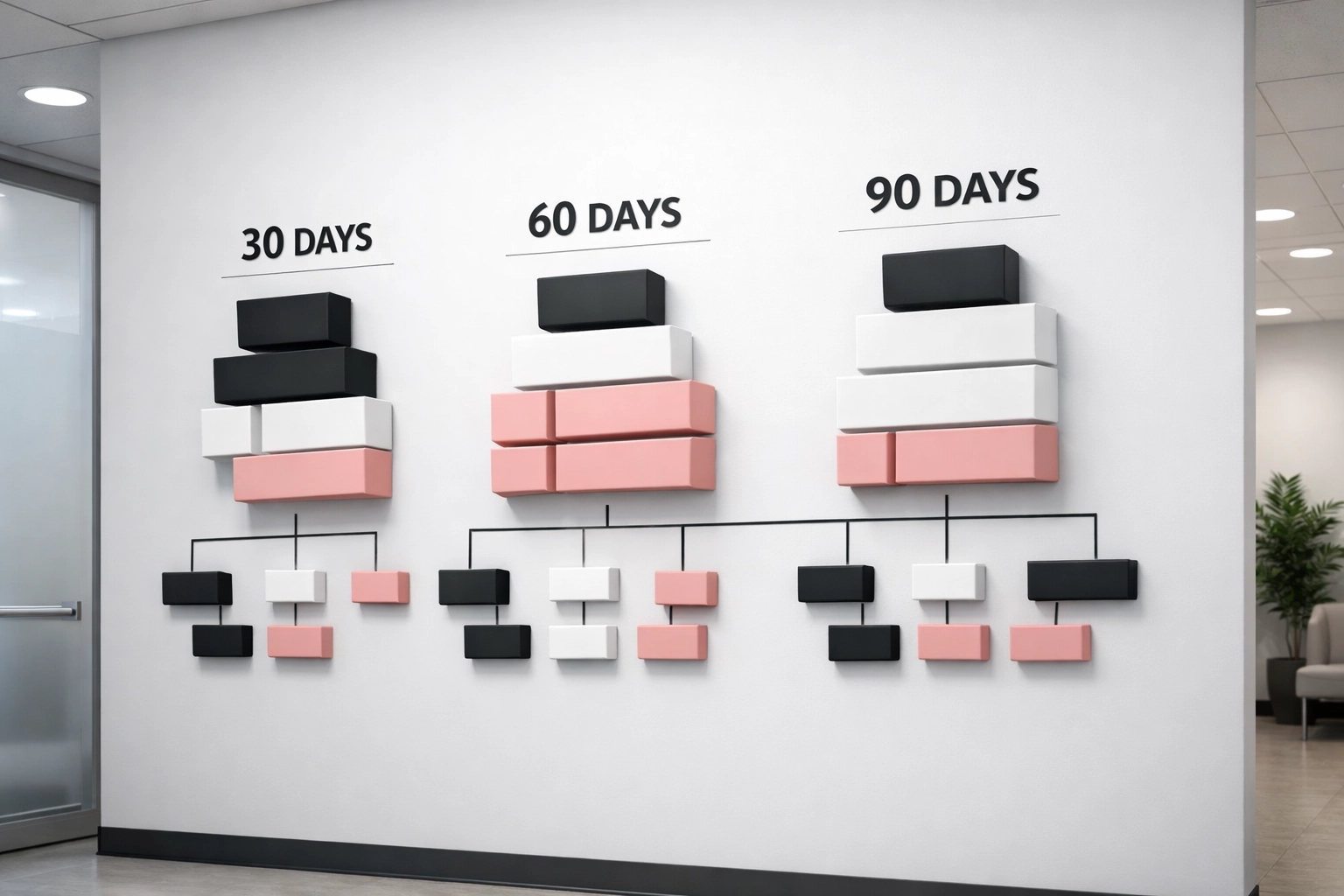
The 90-Day Framework That Actually Works
Think of this framework as onboarding insurance. You're protecting your investment and setting your DON up to succeed, not just survive.
Here's how it breaks down:
Days 1-30: Start-Up & Training (Build the Foundation)
The first 30 days are about removing confusion and building confidence fast.
Day One Essentials:
Full systems access (EHR, scheduling software, payroll systems)
Documentation training: not just a link to a manual
Policy orientation that's practical, not just compliance theater
Clear org chart with who handles what
Week One:
Assign a mentor (an experienced DON or Administrator who gets it)
Introduce key stakeholders: medical director, social services, dietary, housekeeping leads
Review current pain points and priorities: don't sugarcoat it
Set expectations for the first 30 days
Weeks 2-4:
Gradual responsibility handoff with clear milestones
Shadow key meetings and processes before owning them
Daily check-ins to answer questions before they become problems
Review baseline metrics: staffing ratios, survey history, quality indicators
The goal here isn't perfection. It's removing the "figure it out yourself" chaos that makes new DONs question why they took the job.
Days 31-60: Engagement & Efficiency (Prove Early Wins)
By month two, your DON should be managing full responsibilities: but with structured support.
Focus Areas:
Track patient experience metrics and care outcomes
Identify quick wins: streamline a clunky process, solve a recurring staffing issue, improve communication between shifts
Strengthen relationships with nursing staff and department heads
Start contributing ideas, not just following existing protocols
Support Structure:
Formal 30-day check-in with feedback (what's working, what's not)
Weekly touchpoints with leadership to recalibrate priorities
Access to peer DONs for advice (this is huge: DONs need other DONs)
Resources for any skill gaps identified in the first month
This phase is where DONs either gain momentum or start looking at the exit. Early wins matter. They prove to your DON: and your staff: that leadership is invested in their success.
Days 61-90: Refinement & Expansion (Own the Role)
By the final month, your DON should be moving from reactive to proactive.
What This Looks Like:
Analyze outcome data and adjust workflows based on real observations
Launch a quality improvement project or new initiative
Demonstrate autonomy while knowing when to escalate
Solidify their leadership presence with the team
Final Check-In at Day 90:
Review progress against goals set in month one
Discuss long-term growth opportunities
Identify ongoing support needs (mentorship, continuing ed, leadership development)
Celebrate wins: big and small
This isn't just about competency. It's about integration. Your DON should feel like part of the team, not a placeholder until the next crisis.

What Makes This Framework Different
Most facilities think onboarding ends after orientation. That's exactly when it should ramp up.
This framework is different because it's:
Structured but flexible. Clear milestones for each 30-day period, but room to adjust based on your DON's experience and your facility's needs.
Measurable. You're not guessing if it's working. You're tracking progress at 15-day intervals and adjusting resources in real time.
Supportive, not sink-or-swim. You're giving your DON what they actually need: systems access, peer support, clear expectations, and regular feedback.
Preventative, not reactive. You're stopping burnout before it starts by addressing the isolation and overwhelm that drives most DONs away.
The Real ROI of a 90-Day Framework
Let's talk numbers for a second. Structured onboarding like this improves retention by up to 25% and boosts productivity by aligning new hires with organizational goals from day one.
But here's what that actually means:
Your DON stays longer. Your staff sees consistent leadership. Your survey outcomes improve because your nursing department isn't in constant transition. Your facility saves six figures in turnover costs.
And your DON? They don't spend their first three months wondering if they made a terrible mistake.

How to Implement This in Your Facility
You don't need a massive budget or a dedicated onboarding team. You need a plan.
Start with these steps:
The Bottom Line
Hiring a new DON is expensive. Losing one in 90 days is devastating.
But here's the truth: most DON turnover isn't about the DON. It's about the onboarding.
You can't hire someone into chaos and expect them to thrive. You can't skip the foundation and wonder why they crumble under pressure. And you can't treat onboarding like an orientation checklist when what your DON really needs is a stabilization plan.
The 90-day framework isn't magic. It's structure. It's support. It's treating your DON like the critical leadership investment they are.
Because when your DON succeeds, your facility succeeds. And when your DON has what they need to lead well, they don't walk away.
They stay. They build. They make your facility better.
That's the kind of training that sticks.
Comments