The First 72 Hours: Why Your New DON is at Highest Risk (and How to Save Them)
- don2dondevelopment
- Jan 31
- 5 min read
You just hired a Director of Nursing. She starts Monday. You're relieved.
By Wednesday, she's drowning.
Not because she's unqualified. Not because your facility is impossible. But because the first 72 hours of a DON role hit differently than any other position in long-term care. And most Administrators and Executive Directors don't realize how predictable this crash actually is.
Here's what I've learned after watching dozens of DONs walk through those doors: some who made it, and some who quietly started looking for the exit by day four.
The 72-Hour Window: Why It Matters
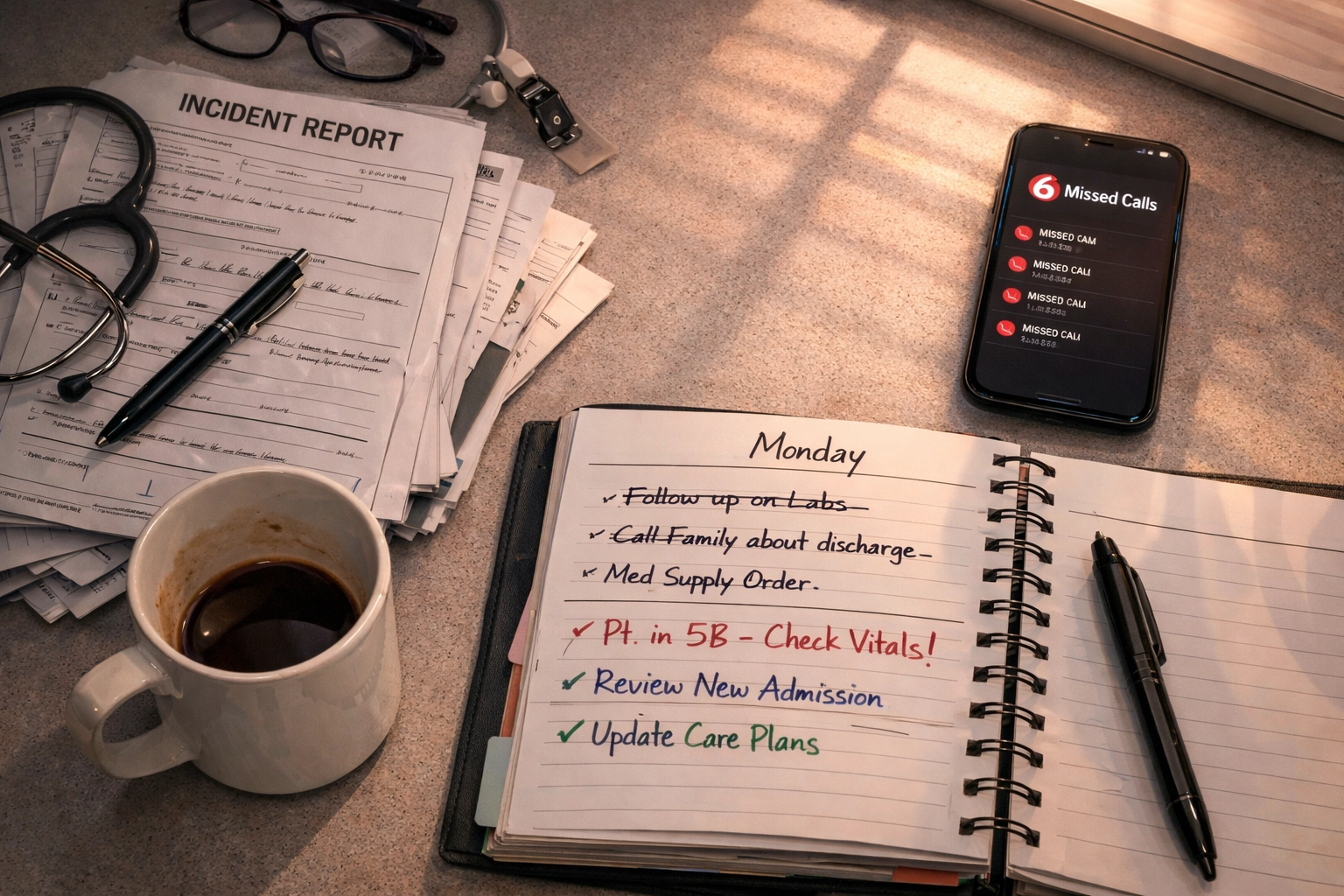
The first three days aren't just orientation. They're the moment your new DON decides whether this job is survivable.
Within 72 hours, a new Director of Nursing will face:
An inherited schedule with holes she didn't create
Staff who test boundaries immediately
A family complaint that "needs handling today"
A survey-related question she wasn't briefed on
At least one crisis she has zero context for
She doesn't know your culture yet. She doesn't know which nurses are solid and which ones call off every Monday. She doesn't know that the wound care nurse and the weekend supervisor haven't spoken in six months.
And she's making decisions anyway. Because that's the job.
If she feels set up to fail in those first 72 hours, you've lost her trust. And trust is the only thing that keeps a DON from burning out in month three.
What Actually Goes Wrong
It's rarely one massive disaster. It's the accumulation of small fires with no map.
She inherits problems with no handoff. The last DON left in a hurry, or the interim DON was juggling three facilities. Your new hire gets a messy office, incomplete records, and a vague "good luck." She has no idea what's actually urgent versus what's been broken for years.
Director of nursing responsibilities hit all at once. Policy updates. Staffing coverage. Clinical oversight. Family meetings. Survey prep. Resident care plans. Vendor management. Compliance tracking.
On paper, a DON knows these responsibilities exist. In reality, they all demand attention simultaneously in the first 72 hours. And no one's telling her which fire to put out first.
The staff test her immediately. A nurse calls off with no notice. Another one demands a schedule change "right now." Someone passive-aggressively mentions "how the last DON did it." It's not malicious: it's normal. But if your new DON doesn't know how to assert herself without alienating the team, she'll either overreact or get steamrolled.
She has no safety net. Most Administrators are juggling their own fires. The expectation is often: "You're the DON. You've got this." But a DON who doesn't feel supported in her first week will start operating in survival mode instead of leadership mode.
And survival mode doesn't retain staff. It burns them out.
The Staff Retention Problem No One Talks About

Here's the quiet truth: staff retention in nursing homes doesn't start with frontline CNAs. It starts with a stable DON.
When a Director of Nursing is overwhelmed, reactive, and unsupported, the entire care team feels it. Nurses disengage. Good CNAs start looking elsewhere. The culture shifts from "we're in this together" to "every person for themselves."
I've watched it happen.
A strong DON who survives the first 72 hours can stabilize a chaotic facility within 90 days. But a DON who's set up to fail will either quit: or worse, stay and become part of the dysfunction.
The cost? Another recruitment cycle. Another gap in leadership. Another three months of instability while you scramble to fill the role again.
And your frontline staff? They stop believing leadership cares. Turnover spikes. Morale tanks. The best people leave first.
Your DON is the linchpin. If she doesn't make it, your retention strategy doesn't matter.
What a New DON Actually Needs (And Doesn't Get)
Most facilities hand a new DON a policy binder, a key to the med room, and a "let me know if you need anything."
That's not enough.
What she actually needs in the first 72 hours:
Clarity on what's actually urgent. Not everything is a priority. But if no one tells her what truly matters this week, she'll treat everything like a five-alarm fire. That's exhausting and unsustainable.
A roadmap for her first three days. Who should she meet? What should she review? What decisions can wait? A simple checklist eliminates the paralysis of "where do I even start?"
Permission to ask for help. A new DON will assume she's supposed to have all the answers. If you don't explicitly tell her it's okay to escalate, ask questions, or admit she's still learning your facility, she'll try to white-knuckle it alone.
Context on the team dynamics. Who's reliable? Who's struggling? Who's been acting up? A five-minute conversation about "here's what you're walking into" can prevent a dozen avoidable conflicts.
A clear point of contact. She needs to know: when something goes sideways, who does she call? If the answer is unclear, she'll either bother you constantly or handle things alone and make mistakes.

This isn't hand-holding. It's leadership infrastructure.
The 72-Hour Survival Guide: Onboarding Insurance for Your DON
Here's what I wish every Administrator and Executive Director understood: the first 72 hours are preventable chaos.
You can't eliminate every crisis. But you can give your new DON a structured plan that turns those three days from a gauntlet into a foundation.
A 72-Hour Survival Guide isn't a binder full of theory. It's a practical roadmap that answers:
What do I handle today?
What can wait until next week?
Who do I need to meet, and why?
What's the one thing I absolutely can't screw up?
It's onboarding insurance. You're not micromanaging: you're setting her up to lead with confidence instead of panic.
The DONs who get this kind of structure? They stay. They stabilize the team. They become the leader you actually need.
The DONs who don't? They either quit or become another staffing problem you're managing six months from now.
What This Looks Like in Practice

Let me give you a real example.
I worked with an Executive Director who hired a DON for a 120-bed facility that had cycled through three DONs in 18 months. The new hire was experienced, confident, and ready.
Day one: she walked into a scheduling crisis, two call-offs, and a family meeting no one had prepped her for. By day three, she was underwater.
The ED realized the problem and pivoted. He sat down with her for 20 minutes and walked through:
"Here are the three things that must get handled this week. Everything else is noise."
"Here's the nurse you can trust to help you with coverage. Here's the one who will test you."
"If something goes sideways, text me. I'd rather hear it from you than from a resident's daughter."
That conversation changed everything. She stabilized the unit in 60 days. Staff retention improved. The facility passed their next survey.
Not because she was magic. Because someone gave her a clear path through the chaos.
The Bottom Line
You can't prevent every fire in the first 72 hours. But you can prevent your DON from feeling like she's burning down with them.
If you're hiring a Director of Nursing: or you've got one who just started: ask yourself:
Does she know what actually matters this week? Does she have a plan, or is she winging it? Does she feel supported, or does she feel alone?
The DONs who make it past 72 hours don't just survive. They lead. They retain staff. They stabilize your facility.
The ones who don't? You're back to square one in three months.
Your DON is at highest risk in the first 72 hours. But that risk is manageable if you treat onboarding like the leadership moment it actually is.
Give her the guide. Give her the structure. Give her a shot at success.
Because when your DON wins, your entire facility wins.
Comments